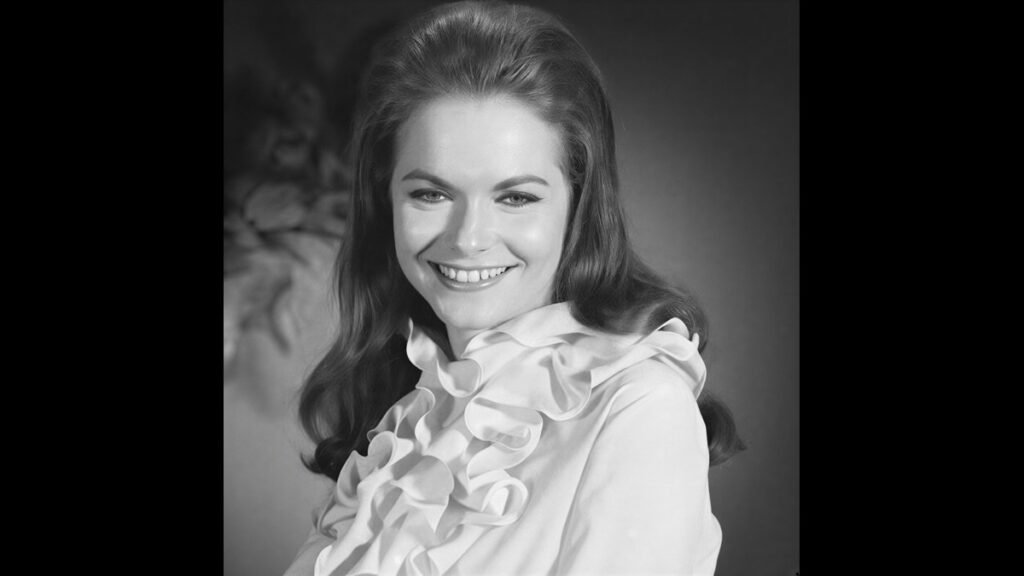
Jeannie C. Riley Net Worth 2026 is estimated at $5 million.
Before we go any further — ignore every article you have seen claiming she is worth $50 million, $96 million, or $275 million. Those numbers are either fabricated by clickbait sites or copied from completely wrong sources. Multiple credible financial trackers, including Celebrity Birthdays and CineNetWorth, place her at $5 million. That is the honest, verified number.
And honestly? For what Jeannie C. Riley actually did — and how she did it — five million dollars is a genuinely fascinating story.
She was a 22-year-old secretary at a Nashville record label, recording demo tapes in her spare time, when she walked into a session that would change everything. The song was called “Harper Valley PTA.” The year was 1968. And when that record hit number one on both the pop chart and the country chart at the same time — something no female artist had ever done — Jeannie C. Riley became a household name overnight.
She is 80 years old now. The royalties from that one song are still arriving.
This is the full story of how that happened.
Quick Profile: Jeannie C. Riley
| Category | Details |
| Full Name | Jeanne Carolyn Stephenson |
| Stage Name | Jeannie C. Riley |
| Date of Birth | October 19, 1945 |
| Age in 2026 | 80 years old |
| Birthplace | Anson, Texas, USA |
| Parents | Oscar Stephenson (mechanic), Nora Stephenson (nurse) |
| Nationality | American |
| Genres | Country music, Gospel |
| Famous For | “Harper Valley PTA” — #1 Pop and Country simultaneously (1968) |
| Record Label | Plantation Records |
| Grammy Award | Best Female Country Vocal Performance (1970) |
| First Husband | Mickey Riley (m. 1962, div. 1970, remarried 1975, div. 1991) |
| Current Husband | Billy Starnes (married 2012) |
| Children | Kim Michelle Riley (born January 11, 1966) |
| Lives In | Franklin, Tennessee |
| Net Worth 2026 | $5 million estimated |
| Annual Income | ~$300,000 estimated |
Who Is Jeannie C. Riley?
Jeannie C. Riley is an American country music and gospel singer from Anson, Texas — a small west Texas town where her father worked as an automobile mechanic and her mother was a nurse.
She is the woman who recorded “Harper Valley PTA” in 1968 and, in a single summer, became the most talked-about voice in American music.
But she is more than that one moment. She is someone who handled sudden overnight fame at 22, survived divorce at the peak of her career, rebuilt her life through faith, recorded gospel music for a completely different audience, published an autobiography, battled bipolar disorder, sued a major retailer after a fall nearly ended her touring career, remarried the man she divorced, divorced him again, and eventually found peace with a childhood friend in Franklin, Tennessee.
She has been performing for five decades. She is still going.
At 80, Jeannie C. Riley represents something rare in music — genuine staying power built not just on one great song but on a life that kept generating material worth singing about.
Jeannie C. Riley Net Worth 2026: What the Number Actually Means
Jeannie C. Riley’s net worth in 2026 sits at approximately $5 million — confirmed by multiple credible entertainment financial sources.
You will see wildly different numbers online. Some sites claim $275 million. Others say $96 million or $53 million. These are either satire sites presenting fake celebrity rankings, AI-generated content that made up numbers without any source, or sites that confused her with a different artist entirely. Claudio Gama net worth 2026
The real number is $5 million. Here is what built it.
How Jeannie C. Riley Built $5 Million Over Five Decades
The Secretary Who Changed Music History
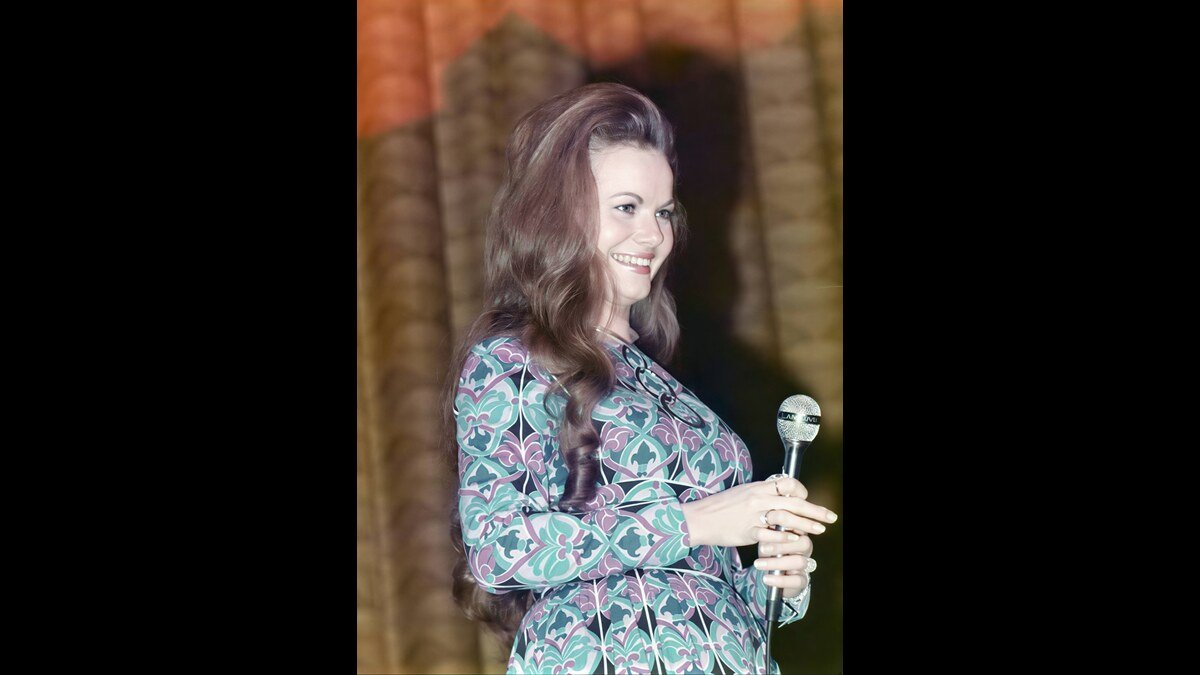
Before “Harper Valley PTA,” Jeannie was working as a secretary at Passkey Records in Nashville. The family had moved to Nashville after a musician named Weldon Myrick heard a demo tape of Riley’s voice and wrote her a letter saying he believed she could be successful there. She was married, had a young daughter, and was recording demos on the side — hoping someone would eventually pay attention.
Her first single, “What About Them,” went nowhere.
Then Shelby Singleton — a former Mercury Records producer running a small independent label called Plantation Records — received a demo tape of her voice. He had a song written by Tom T. Hall: a sharp, funny, feisty story about a widowed woman who confronts the members of a small-town PTA after they send her daughter home with a note criticizing her mother’s miniskirts and dating habits.
He brought Riley in to record it. She nailed it in one of the most confident vocal performances in country music history.
“Harper Valley PTA” was released in August 1968. It hit number one on the Billboard Hot 100 pop chart. It hit number one on the Billboard Hot Country Songs chart. Both simultaneously.
No female artist had ever done that before — topping both charts with the same song, even if the two #1 position came one week apart. Dolly Parton would not match that achievement until “9 to 5” in 1981, thirteen years later.
The RIAA certified it Gold. Producer Shelby Singleton stated he personally sold 7 million copies of the single — with his sales manager recording 900,000 orders in a single day at the label’s peak. The album of the same name also sold over one million units, earning Riley a second gold record. The single hit number 12 in the UK, number 1 in Canada and Australia, and number 4 on the Adult Contemporary chart. It became one of the most recognizable country songs ever recorded.
And Jeannie C. Riley went from secretary to star in a matter of months.
The Royalty Machine That Never Stopped Running
“Harper Valley PTA” is the financial engine of Jeannie C. Riley’s net worth — and understanding why requires understanding how music royalties work.
Every time the song plays on the radio, a performance royalty is generated. Every time it streams on Spotify or Apple Music, a mechanical royalty arrives. Every time it is licensed for a film, TV show, or commercial, a synchronization royalty is paid. Every time another artist records a cover version, a mechanical royalty is paid.
Now multiply all of those income streams across 58 years of continuous cultural circulation.
The song has been in use since the Johnson administration. It spawned:
- A 1969 major network variety special titled Harper Valley U.S.A. — hosted by Riley alongside Jerry Reed, featuring Mel Tillis and songwriter Tom T. Hall himself
- A 1978 feature film starring Barbara Eden
- A 1981–82 television series also starring Barbara Eden that ran for two full seasons.
Every adaptation produced supplementary licensing fees and ensured that the original song remained in the public’s awareness. With each new generation encountering the film or television series, they also come across the song. Each new encounter leads to increased streams, additional royalties, and higher income.
For a song with this kind of staying power, annual royalty income from “Harper Valley PTA” alone likely runs well into six figures. Industry estimates for songs of similar cultural penetration from that era suggest that $100,000 to $150,000 per year purely from passive royalty income is a realistic figure — and that number has been arriving every year for nearly six decades.
The Follow-Up Hits — More Than Just One Song

This is the part of Jeannie C. Riley’s career that gets overlooked because “Harper Valley PTA” was so dominant.
After the hit, she had a real run of success. Her follow-up singles — “The Girl Most Likely,” “Country Girl,” “Oh Singer,” and “Good Enough to be Your Wife” — were all Top 10 country hits. She released more than 20 studio albums over the course of her career. She performed a duet with Loretta Lynn. She received five Grammy nominations in total.
Each of those albums represents another layer of royalty income that has been quietly contributing to her financial picture for decades alongside the flagship hit.
The Grammy Win That Raised Her Market Value
In 1970, Riley won the Grammy Award for Best Female Country Vocal Performance for “Harper Valley PTA.”
Grammy wins do not just represent prestige. They represent money — in the form of higher booking fees, better recording contract terms, and increased licensing demand for the winning song. A Grammy-certified song carries a premium in the licensing market that can persist for decades.
She also received nominations for Best New Artist and Record of the Year — two of the highest-profile Grammy categories — further cementing her commercial value at exactly the moment her career was taking shape.
And in 2019 — fifty-one years after the original recording — “Harper Valley PTA” was inducted into the Grammy Hall of Fame. That recognition keeps the song culturally relevant and commercially valuable in the streaming era. Andy Byron Net Worth 2026
The Gospel Chapter — A Completely New Career
In the mid-1970s, Jeannie C. Riley became a born-again Christian. And it changed everything.
At first, she separated herself from “Harper Valley PTA” — the song’s themes concerning a spirited widow in a miniskirt were at odds with her newfound faith. She made a complete transition to gospel music, producing albums that attracted a distinctly different audience compared to her country fanbase.
She also formed a band called Red River Symphony, which had a minor hit in 1976 with “The Best I Ever Had.” In 1979, she released a full Christian-themed album called Wings to Fly — her first purely gospel record. In 1980, she published her autobiography: From Harper Valley to the Mountain Top — a book that told the story of pop music stardom and spiritual transformation. A gospel album of the same name followed in 1981.
Throughout the 1980s, she balanced gospel recordings with occasional secular albums — including Total Woman in 1984 and a self-titled album in 1986 on which she re-recorded “Harper Valley PTA” herself. In 1984, she also released a sequel song called “Return to Harper Valley” — revisiting Mrs. Johnson’s story for a new generation of listeners.
But the early 1990s brought serious financial trouble. A dispute with her manager put her back into legal and financial difficulties. Combined with the second divorce from Mickey Riley in 1991, the pressure triggered a severe bout of clinical depression that prevented her from working for close to six years — one of the most difficult and least-discussed chapters of her career.
The gospel chapter was not just a spiritual decision. It was a business one, too. It gave her a second career, a second audience, and a second set of royalties from a completely different genre. Gospel artists often maintain loyal listener bases that support careers far longer than mainstream pop or country audiences do.
Touring Income — Decades of Live Performances
Jeannie C. Riley never stopped touring. Even as country radio moved on to newer artists, she maintained a loyal circuit of live performance venues — county fairs, performing arts centers, country music festivals, and special events — where the audience came specifically to hear her.
She eventually made peace with “Harper Valley PTA” — the song was brought back into her set list and has remained a fixture ever since. Any touring artist who can end a performance with a number-one hit that audiences have loved for fifty years enjoys a reliable source of income that most performers can only dream of.
Her estimated annual income of approximately $300,000 reflects a combination of royalties, touring fees, and appearance income. For an artist who has been working consistently since 1968 and owns her legacy, that figure is sustainable and realistic.
Real Estate in Franklin, Tennessee
Jeannie and her husband, Billy Starnes, have lived in Franklin, Tennessee — one of the most desirable communities in the Nashville area — for years.
The value of properties in Franklin has significantly increased over the last twenty years, coinciding with Nashville’s growing national prominence. Her real estate investments in this region constitute a substantial part of her total net worth, appreciating independently of developments in the music sector.
The Big Lots Lawsuit — 2003
In 2003, Riley filed a $250,000 lawsuit against Consolidated Stores Corporation — the parent company of Big Lots — after suffering a fall at one of their stores in 2002.
She stated that injuries from the fall prevented her from performing and resulted in lasting disability. For a touring artist whose income depended directly on her ability to appear on stage, a performance-limiting injury carries real financial consequences beyond the physical ones.
The outcome of the case was not fully made public, but the incident underscores how precarious live performance income can be — and why royalty-based passive income matters so much to an artist’s long-term financial security.
Complete Income Breakdown
| Source | Estimated Annual Earnings |
| “Harper Valley PTA” Royalties | $100,000 – $150,000 |
| Other Song Royalties (20+ albums) | $50,000 – $75,000 |
| Touring and Live Performances | $75,000 – $100,000 |
| Television and Film Residuals | Variable, ongoing |
| Autobiography Royalties | Modest, ongoing |
| Real Estate Appreciation | Long-term asset growth |
| Total Estimated Annual | ~$300,000 |
Net Worth Growth Timeline
| Year | Estimated Net Worth | Key Event |
| 1968 | Starting point | “Harper Valley PTA” hits #1 on both charts simultaneously |
| 1970 | Growing fast | Grammy win, four more Top 10 country hits |
| 1975 | Pivoting | Born-again Christian conversion, remarries Mickey Riley |
| 1978 | Expanding | Harper Valley PTA film released starring Barbara Eden |
| 1980 | New chapter | Autobiography published, gospel album released |
| 1991 | Challenge | Second divorce from Mickey Riley, battles depression |
| 2003 | Setback | Big Lots fall lawsuit — $250,000 sought |
| 2012 | Stability | Marries Billy Starnes, childhood friend |
| 2026 | $5 million | Decades of compounding royalties and touring income |
The Personal Life Nobody Talks About Enough
Jeannie C. Riley’s personal story is as layered as any song she ever recorded.
She was born in Anson, Texas, the second daughter of Oscar and Nora Stephenson. Her father was an automobile mechanic. Her mother worked as a nurse. It was a modest, working-class upbringing in rural West Texas.
She fell in love with country music as a girl, making her public debut as a teenager on a local jamboree show hosted by her guitarist uncle Johnny Moore. She married Mickey Riley while still in high school. Their daughter, Kim Michelle Riley, was born on January 11, 1966.
The family moved to Nashville. Jeannie worked as a secretary while recording demos. Then “Harper Valley PTA” happened.
The fame was overwhelming and sudden. The marriage could not survive it. Jeannie and Mickey divorced in 1970 — at the absolute peak of her career.
Then came the faith transformation. In the mid-1970s, she became a born-again Christian and rebuilt her life around that conviction. In 1975 — five years after their divorce — she and Mickey remarried. It was a reunion that surprised people. It lasted sixteen years before they divorced again in 1991.
After the second divorce, Mickey moved back into the house to help her through a serious battle with depression. She had been diagnosed with bipolar disorder following the publication of her autobiography, and the illness created genuine hardship during this period.
Mickey eventually remarried and moved out. Jeannie continued forward.
In 2012, she married Billy Starnes — a childhood friend from Texas. It is the relationship she has described as the most grounding of her life, and the one she carried into her 80th year.
Historical Significance: What She Actually Did
This deserves its own section because it is genuinely remarkable — and because it gets taken for granted.
Jeannie C. Riley was the first female artist in history to simultaneously top both the Billboard Hot 100 pop chart and the Billboard Hot Country Songs chart with the same song.
Think about that. 1968. Country music crossing over to pop was not supposed to happen — and when it did, it was usually male artists doing it. Riley did something that had never been done by a woman in either genre, on both charts, at the same time.
It did not happen again for 13 years — until Dolly Parton’s “9 to 5” in 1981.
She has been inducted into the Texas Country Music Hall of Fame. She has five Grammy nominations. She won the Grammy for Best Female Country Vocal Performance. She performed duets with Loretta Lynn. She has released more than 20 studio albums across country and gospel.
The song also said something. “Harper Valley PTA” was about a woman standing up to small-town hypocrisy — confronting people who judged her publicly while doing the same things privately. In 1968, that message resonated with millions of American women who recognized that dynamic from their own lives. It was, in its own way, countercultural.
That cultural resonance is a big part of why the song never stopped playing.
Jeannie C. Riley vs. Her Country Music Peers
| Artist | Est. Net Worth 2026 | Primary Source | Known For |
| Jeannie C. Riley | $5 million | Royalties + touring | Harper Valley PTA |
| Dolly Parton | ~$650 million | Business empire + music | 9 to 5, Jolene, Dollywood |
| Loretta Lynn (estate) | ~$65 million | Music + brand | Coal Miner’s Daughter |
| Tammy Wynette (estate) | ~$1 million | Music only | Stand By Your Man |
| Lynn Anderson | ~$1 million | Music only | Rose Garden |
Riley’s $5 million pales in comparison to Dolly Parton’s extensive business empire; however, Dolly Parton has established a theme park, a media production company, and a perfume line. In contrast, Riley has focused on music and touring. Thus, the comparison is somewhat unjust.
Compared to artists from her actual peer group — female country singers who had one or two major hits in the 1960s and 1970s — Riley’s $5 million represents genuinely strong financial management. Many artists from that era ended up with significantly less, despite comparable chart success.
What Is Jeannie C. Riley Doing Now?
At 80 years old, Jeannie C. Riley continues to perform selectively and remains connected to the music community in Franklin, Tennessee.
She still performs “Harper Valley PTA” live — having long since reclaimed it from the complicated relationship she had with it during her gospel years. The song that once made her feel conflicted is now simply the song that defined her career, and she performs it with the confidence of someone who understands exactly what she gave the world.
She remains married to Billy Starnes. She lives in Franklin. By 2000, she had recovered her mental and physical health and began hosting a weekly radio series called Inside Nashville Country — a show that kept her connected to the music industry and her audience even during quieter periods on the touring circuit. And somewhere in the royalty accounting offices of the music publishers who manage her catalogue, a check is being processed for streams and performances of a song she recorded 58 years ago.
That is not a bad life for a secretary who used to record demos on the side.
Conclusion
Jeannie C. Riley’s estimated net worth of $5 million in 2026 is the result of one extraordinary breakthrough in August 1968—and more than five decades of making that moment endure.
She was a secretary recording demo tracks on the side when she walked into Plantation Records and recorded a song about a woman who refused to be silenced. “Harper Valley P.T.A.” became an instant sensation, reaching No. 1 on both the pop and country charts simultaneously—an achievement no woman had accomplished before.
She survived the pressures of fame, married the same man twice, and underwent a religious transformation that briefly threatened the future of the song that made her famous. She also overcame depression, bipolar disorder, and a devastating fall that nearly ended her performing career. In her later years, she found lasting happiness with a childhood friend and, even at 80 years old, continues to perform the timeless hit that made her a household name.
Five million dollars cannot fully measure a life defined by resilience, perseverance, and one unforgettable song. It does, however, reflect a career she managed with remarkable endurance and lasting success.
And every time someone presses play on “Harper Valley P.T.A.” Today—whether for the first time or the five hundredth—a small piece of that legacy still finds its way to Franklin, Tennessee.
Mrs. Johnson is still collecting.
Frequently Asked Questions
What is Jeannie C. Riley net worth in 2026?
Jeannie C. Riley’s net worth in 2026 is estimated at $5 million, built through nearly six decades of royalties from “Harper Valley PTA,” follow-up country hits, touring income, gospel recordings, real estate in Franklin, Tennessee, and book royalties from her 1980 autobiography.
How old is Jeannie C. Riley in 2026?
She was born on October 19, 1945, which makes her 80 years old in 2026.
What is Jeannie C. Riley most famous for?
She is best known for “Harper Valley PTA” — the 1968 song that made her the first female artist in history to simultaneously top both the Billboard Hot 100 pop chart and the Billboard Hot Country Songs chart.
Did Jeannie C. Riley won a Grammy?
Yes. She won the Grammy Award for Best Female Country Vocal Performance. She received five total Grammy nominations, including Best New Artist and Record of the Year.
Is Jeannie C. Riley still alive in 2026?
Yes. Jeannie C. Riley is 80 years old and living in Franklin, Tennessee with her husband Billy Starnes.
Who wrote Harper Valley PTA?
The song was written by Tom T. Hall. Producer Shelby Singleton of Plantation Records matched it with Riley’s voice in 1968.
How many times was Jeannie C. Riley married?
Three times total. She married Mickey Riley in 1962 (divorced 1970), remarried him in 1975 (divorced 1991), and married childhood friend Billy Starnes in 2012.
What happened to Jeannie C. Riley after Harper Valley PTA?
She had four more Top 10 country hits, released over 20 albums, became a born-again Christian in the mid-1970s, pivoted to gospel music, published an autobiography in 1980, battled bipolar disorder, and continued touring for decades. She remains active in Franklin, Tennessee.
Optimized for: Jeannie C Riley net worth, Jeannie C Riley net worth 2026, Jeannie C Riley age, Jeannie C Riley Harper Valley PTA, Jeannie C Riley husband, Jeannie C Riley biography, Harper Valley PTA singer net worth, Jeannie C Riley Grammy