
Stewart Copeland Net Worth 2026 If you know hits like “Every Breath You Take” and “Roxanne,” you know Stewart Copeland, the legendary drummer and co-founder of The Police. As of 2026, his estimated net worth is around $80 million, built through music, film scoring, composing, and other creative ventures. His success goes beyond The Police, with multiple income streams helping shape his impressive financial journey.
Stewart Copeland Quick Bio and Net Worth Table
| Detail | Information |
|---|---|
| Full Name | Stewart Armstrong Copeland |
| Net Worth (2026) | $80 Million |
| Date of Birth | July 16, 1952 |
| Age | 74 years |
| Birthplace | Alexandria, Virginia, USA |
| Profession | Musician, Drummer, Composer, Filmmaker |
| Known For | Co-founder and drummer of The Police |
| Grammy Awards | 7 |
| Spouse | Fiona Dent |
| Children | 3 (Dylan, Eve, Celeste) |
| Nationality | American |
| Income Source | Music royalties, film/TV/game scoring, touring, real estate |
Who Is Stewart Copeland?
Stewart Armstrong Copeland was born on July 16, 1952, in Alexandria, Virginia. His early years were far from ordinary. His father, Miles Copeland Jr., worked as a CIA officer, and the family spent time living in the Middle East during his childhood. Growing up around Lebanese music, jazz, reggae, and rock and roll gave young Copeland a mixed musical diet that most Western kids never got. Instead of copying one style, he picked pieces from each of them and blended them into something new. That mix later became the foundation of his drumming style.
He picked up the drums as a teenager and never looked back. Before The Police, Copeland played with the progressive rock band Curved Air, where he sharpened his skills and gained his first real taste of the music industry. Those early years were less about money and more about learning the craft, but they set the stage for everything that came next.
The Police: Where It All Began
Awards, Honors, and Industry Recognition
What Makes His Drumming Style So Valuable
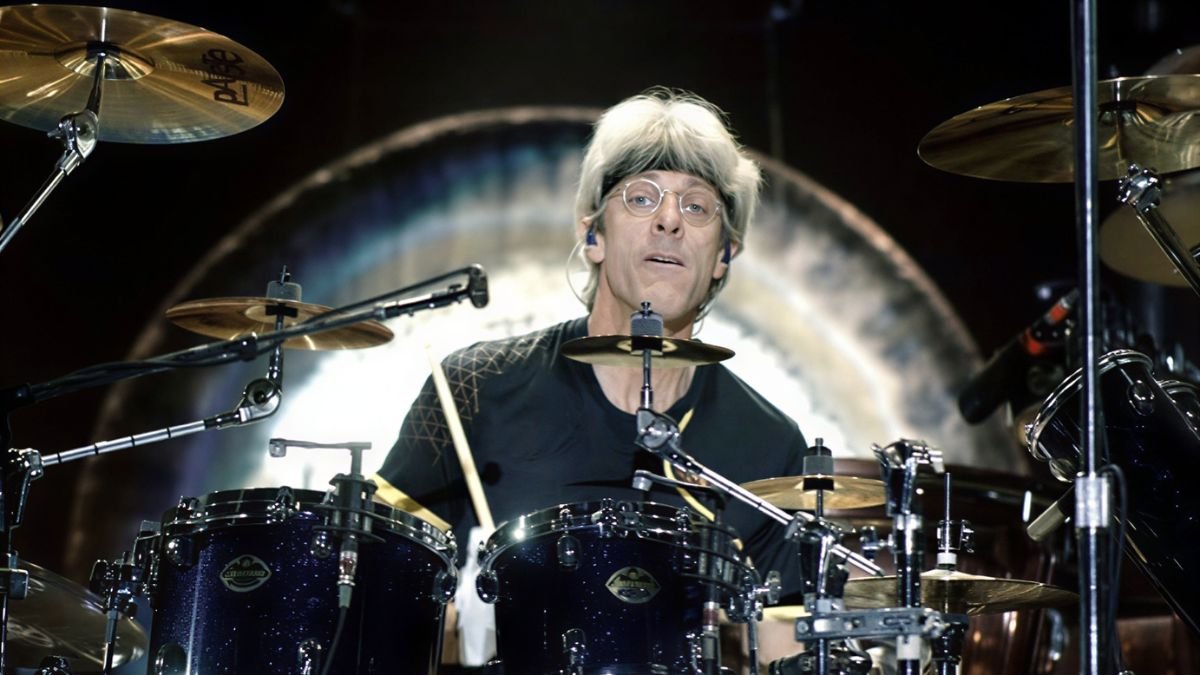
Copeland’s drumming style is part of his brand, and brand value translates into money in the music industry. He is known for using octobans, a set of eight narrow tube-shaped drums that gave his sound a bigger, more layered feel. He also helped design a distinctive splash cymbal with Paiste, based on a toy cymbal he owned as a kid.
One unusual detail fans often bring up is that Copeland is left-handed but plays a right-handed drum kit, with his hi-hats on the left and his ride cymbal and floor toms on the right. This unusual setup gives his playing a slightly different feel compared to most drummers, and it became part of his signature sound. He is also known for his heavy use of the hi-hat, often keeping rhythm using only the hi-hat and bass drum rather than the full kit, a technique that even caught the attention of artists like Peter Gabriel, who invited him to play hi-hats on the song “Red Rain.”
This kind of technical reputation matters for net worth because it keeps Copeland in demand as a session player, collaborator, and teacher, long after his peak years with The Police.
Life After The Police: Film and TV Scoring
What really sets Copeland apart from other classic rock drummers is what he did after the band split. Instead of relying only on old hits, he built a second full career as a composer.
Copeland has written music for more than 50 films and TV shows, including well-known titles like “Rumble Fish” and “Wall Street.” He also composed music for video games, most notably the “Spyro the Dragon” series, which introduced his work to an entirely new generation of fans who may not even know he was once a rock drummer.
This soundtrack work created a steady, long-term income stream that most rock musicians never build. Every time one of his scores gets used, licensed, or replayed, it adds a little more to his overall wealth. Film and game composing tends to pay through a mix of upfront fees and ongoing royalties, which means Copeland has been quietly earning from this side of his career for decades, often without much public attention. Robert Downey Jr. net worth
Solo Projects and Other Ventures
Copeland never really stopped creating. He released solo albums such as “The Rhythmatist” and “Everywhere Is Home.” He also formed side projects like Animal Logic, Gizmo, and later Gizmodrome, a supergroup he started in 2005 alongside guitarist David Fiuczynski, multi-instrumentalist Vittorio Cosma, singer Raiz, and bassist Max Gazzè. The band later evolved with new members, including Adrian Belew and Mark King, and released an album where Copeland even took on lead vocals.
He also joined the rock supergroup Oysterhead alongside bassist Les Claypool and guitarist Trey Anastasio, showing just how wide his musical circle really is. Early in his career, he also recorded under the alter-ego “Klark Kent,” releasing UK singles that charted without revealing his real identity at first.
Beyond music, Copeland has composed works for opera, orchestra, and ballet as well — something very few rock drummers ever attempt. In 2006, he even directed a documentary film about The Police called “Everyone Stares: The Police Inside Out,” which premiered at the Sundance Film Festival. He later appeared as a judge on the BBC television show “Just the Two of Us.” This mix of rock background and classical, cinematic, and television ambition has kept his name relevant across very different audiences, and that visibility keeps translating into new income opportunities. Darryl Strawberry Net Worth 2026
Where Does Stewart Copeland’s Money Come From?
To really understand Stewart Copeland net worth, it helps to look at his main income sources:
- Music royalties from The Police’s back catalog, especially from streaming, radio, and licensing deals
- Film, TV, and video game scoring fees and ongoing royalties
- Live performances, including reunion tours and solo shows
- Album sales from both his band career and solo work
- Real estate, including properties in California and abroad
- Documentary, television, and directing work
- Classical and orchestral compositions, including opera and ballet projects
Unlike artists who depend on one single income stream, Copeland’s wealth comes from several directions at once, which is part of why his net worth has stayed strong for so long, even in years when he isn’t touring.
Stewart Copeland Net Worth 2026 Real Estate and Lifestyle
Stewart Copeland Net Worth 2026 Personal Life
Stewart Copeland is married to Fiona Dent, and the couple has three children together: Dylan, Eve, and Celeste. He splits his time between creative projects, family life, and the occasional Police-related reunion or tribute event. Even now, in his 70s, he remains active in music, proving that his career is far from over.
His personal story also adds context to his financial success. Growing up in a household exposed to different cultures and constant travel likely shaped his openness to blending genres, which later became a career advantage rather than just an artistic choice. That same adaptability seems to show up throughout his adult life too, from switching between rock, film scoring, and orchestral work without ever fully abandoning any one of them.
How Stewart Copeland Net Worth Compares to Other Rock Drummers
Stewart Copeland Net Worth: A Rough Timeline
Looking at how Stewart Copeland net worth likely grew over time helps explain why the number is where it is today.
1977–1986 (The Police era): This is when Copeland’s wealth really took off. Album sales, world tours, and radio hits with The Police brought in the bulk of his early fortune. By the time the band split in 1986, Copeland was already a millionaire many times over, thanks to record sales that eventually crossed 60 million copies worldwide.
1986–2000s (Solo and composing years): After The Police broke up, Copeland shifted into film, TV, and video game scoring. This period didn’t generate the massive lump sums of a world tour, but it built a slow, steady stream of income that kept flowing year after year, project after project.
2003–2007 (Reunion buildup): The Rock and Roll Hall of Fame induction in 2003 and the surprise Grammy performance in 2007 reignited public interest in The Police. This set the stage for one of the most profitable reunion tours in rock history.
2007–2008 (The reunion tour): The Police’s 30th-anniversary reunion tour, with 151 shows across five continents, reportedly grossed more than $350 million. Even split three ways and after expenses, this tour alone likely added tens of millions of dollars to Copeland’s fortune.
2010s–2020s (Diversified income): During this stretch, Copeland kept composing for film and games, released more solo and collaborative projects like Gizmodrome, invested in real estate, and continued earning steady royalties from The Police’s catalog through streaming platforms, which exploded in popularity during this decade. This was also the period where his back catalog started reaching a younger audience who discovered The Police through playlists rather than radio.
2026 (Today): With decades of layered income streams now working together, Stewart Copeland net worth sits at an estimated $80 million, a figure supported by continuous royalties, composing fees, and property value growth.
Lessons From Stewart Copeland’s Financial Journey
There’s something worth learning from how Stewart Copeland net worth was built, even if you’re not a musician. A few patterns stand out:
- He never relied on one income source. Royalties, composing, touring, and real estate all worked together instead of him depending on just record sales.
- He kept creating long after fame slowed down. Many artists stop putting out new work once the spotlight moves elsewhere. Copeland kept scoring films, writing for orchestras, and forming new bands well into his 60s and 70s.
- He protected his catalog. Because The Police’s songs are still licensed for films, commercials, and shows today, that older work keeps paying him decades later.
- He turned skills into new markets. Drumming skills translated into film scoring, then into video game work, then into orchestral composing. Each new skill opened a new income door.
This approach explains why Stewart Copeland net worth has stayed strong and steady, rather than spiking once and slowly fading, which is what happens to many musicians who rely only on their peak years. It’s a pattern worth noting for anyone curious about long-term wealth building in a creative field: consistency and reinvention often matter more than one big payday. Stewart Copeland Net Worth 2026
Common Myths About Stewart Copeland’s Wealth
Because celebrity net worth figures spread quickly online, a few myths about Stewart Copeland net worth are worth clearing up.
Myth: His net worth is in the hundreds of millions. Some low-quality websites list wildly inflated numbers for Copeland, sometimes claiming figures in the hundreds of millions or even close to a billion dollars. These numbers don’t match reliable, well-sourced estimates and are not backed by any real financial reporting. Most credible sources consistently place his fortune at around $80 million.
Myth: He only makes money from The Police. While Police royalties are a major part of his income, a large portion of Stewart Copeland net worth actually comes from his composing career, real estate, and other music projects built after the band split.
Myth: He earned as much as Sting. Sting wrote most of The Police’s biggest hits, which means he collects a much larger share of songwriting royalties. Copeland’s wealth, while impressive, is generally believed to be smaller than Sting’s for this exact reason. Still, when you factor in his composing career and other ventures, the actual gap between the two may be smaller than most people assume.
Conclusion
Stewart Copeland’s wealth comes from much more than The Police. His estimated $80 million net worth in 2026 is supported by royalties, composing, touring, film and game scoring, and real estate. His career shows how creative versatility can build lasting wealth.
Frequently Asked Questions About Stewart Copeland Net Worth
What is Stewart Copeland’s net worth in 2026?
Around $80 million.
How did Stewart Copeland make his money?
Mainly through Police royalties, film and TV scoring, tours, and real estate.
Is Stewart Copeland still earning money from The Police?
Yes, through streaming, radio play, and licensing deals.
Does Stewart Copeland still work in music?
Yes, he still composes and performs occasionally, including with Gizmodrome.
How many Grammy Awards has Stewart Copeland won?
Seven, across his band and solo career.
Was Stewart Copeland the highest earner in The Police?
No, Sting likely earned more due to songwriting royalties.
What real estate does Stewart Copeland own?
Homes in Brentwood and Montecito, California, plus property ties in Italy.
Did the 2007 Police reunion tour add a lot to his net worth?
Yes, the tour grossed over $350 million across 151 shows.